Sunday, February 27, 2011

Shooting for Stock Photography


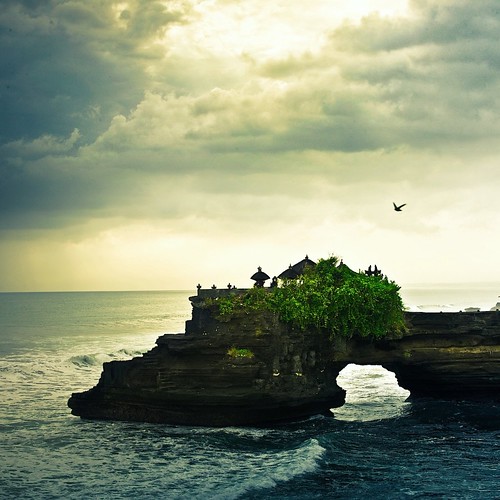
Cuba Gallery: Indonesia Bali / summer / landscape / sky / clouds / wave / water / sunset / ocean / sea / photography / buildings by ►CubaGallery


Photo Credit: celtics baby clothes


A great way to earn money and learn a lot in the internet is participating in stock photography. Stock photography has been around for a while. And there are a lot of great stock sites that sell photographs for a reasonable price.

Just how and what should you shoot to be able to participate in stock photography?

Photographers say you should start with the concept. But the very first thing you should do is to know your equipment. I literally spent ten times more time trying to know how my camera works than thinking of something to shoot.

Stock photography is a very demanding industry. It's as close as you'll get to professional photography. It requires you to be able to produce images of the highest quality. That is because this industry is very competitive.

Try shooting the same subject with different settings. You should know how your camera reacts with different kinds of light. You should also know how it responds to different levels of illumination. Note the differences you see and keep them in mind.

Next you need a concept. Your images should present an idea, a thought or an expression. Consider a photograph of a man typing on a computer. What is he doing? Why is he typing? Is he working? Is he Blogging? Or just playing?

Designers buy stock images because of the concept they present - not because they look good. Stock photos are used in web sites, brochures, magazines, publications, advertisements, and almost anything that has a print.

So you need to have an image that has a concept that satisfies the needs of the would-be buyers of your pictures.

Then, you need a lot of light. Stock photos require that images have the right level of illumination and contrast. They need to be clear. If you can't afford a big set-up, you can always use desk lamps or even the sun.

You'll also need a computer and two kinds of programs: noise reduction tool and a photo editing application. Most stock photographs go through a noise reduction process. They also get a little tweaking in color, contrast and brightness.

Stock photographs need to be as close to perfect as possible. It's like what they say in the computer graphics industry: "it does not matter how you do it as long as you get the job done." Don't think that editing a photo in your pc is cheating. That only goes for journalism.

The next is pretty simple. You need a stock agency to upload your images to. Or you can showcase your work in your own site. Uploading in stock agencies is better. That is because you can find out where and how to improve. Use their powerful community to find out your weakness and strengths as a photographer.

Then when you have all this, what you need to do next is to be consistent and improve and improve and improve. You need to keep up with the ever demanding industries. If you don't, you'll get left behind.


Photographer Interview: Break into Concert Photography


Cuba Gallery: Fork / wood / background texture / water / photography by ►CubaGallery


photo source


Anthony Siciliano of Ramsey, NJ, was initially attracted to photography through some playful competition with his friends. Even when he realized his friends had no idea how to use their cameras, he stuck with it and earned recognition in photography and videography.

As a photojournalist and concert photographer his experience is transferring into his newest venture as part of Awesome Farm - a video production and photography business formed with his friends. At least with the friends that know how to use a camera.

Siciliano answered a few questions and gave some advice for fellow photographers looking to break in to photography, specifically concert photography and photojournalism.

What was your first camera?
My first DSLR was a Nikon D80 with the 18-70 mm lens. However, the first point-and-shoot that I bought for myself was a Pentax Optio S-40, which I still have. I really enjoyed taking pictures of flowers, but I was dissatisfied with the performance and results of my point-and-shoot (particularly, the shutter lag). I looked into DSLRs, and ended up purchasing the D80. Thousands of dollars, and much gear later, here I am.

What photographers - well known or unknown - inspire you?
I really have fun with concert photography, live shows where I bring back photos that give you a good sense of what happened during an event. A photographer that does this very well is Todd Owyoung. His website is http://ishootshows.com/. Not only does he get awesome results, but also he shares his wealth of knowledge with everyone, which I respect immensely.

Check out the Strobist blog as well. It features off-camera lighting and lots of DIY equipment at http://strobist.blogspot.com/.

Is there a certain piece of gear you could not live without?
I do not skimp on my gear, and it has definitely paid off. In my opinion, it is better to save up for a longer time and get better equipment, than it is to spend early on something else. Unfortunately, I am addicted to buying new things, which can get very expensive. I could not live without any of this stuff, but if I had to pick one lens, the one that does most of my work is the 18-70mm lens.

Do you have any goals in mind with your photography?
I hope that I will be shooting famous bands very soon. A lot of doing that is getting to know the people who run the events, and the people who manage the bands. So far, the most famous people I have photographed in concert are Kate Voegele, Jack's Mannequin and the rest have been local bands. Currently, I shoot for local newspapers. The pay is not very good, but it is fun and better than nothing at all. Doing this will help me get exposure.

What advice would you give to someone who wants to shoot concerts?
The gear that is best for concert photography, at least in my opinion, is fast lenses and cameras with high ISO abilities. It is deceptively dark inside most music venues. My 50 mm lens does a lot of work there, with its extremely fast 1.8 aperture. My other lenses that go down to aperture 2.8 are extremely important. Large wide-open apertures are important for catching performers in action, without blur. Someone that wants to shoot concerts should definitely invest in a 50 mm lens, and save up to buy other fast lenses. Many places do not allow flash during performances, and your brand-new flash unit will not do any good when security tackles you. Also, watch out for drunken people and mosh pits at shows, which is a good way to wreck your camera.

How did you get a job with your local newspaper? What skills does that require?
When I was doing physical therapy for my tendinitis, I met a photographer who was shooting some photos for a brochure. We got to talking, and she gave me the contact info of a local photo editor. The skill involved in photojournalism is the same most other photographers use, except more irritating. Not only do you have to capture good pictures, but also you have to do it consistently, and make sure you get people's first and last names. If you do not get their names, editors will not use your photos. That can be a big disappointment, after all your hard work. You also have to be versatile and ready for anything. Get to events early and scope things out. that is the best advice I can give. Coming in late and not getting a good spot makes things a lot more difficult.

What advice would you give new photographers?
The best way to learn photography is by doing. When I bought my camera, I barely knew how to use the thing. One great thing I think everyone should do is a Project 365. That is where you take one photo per day (at least) and write a little bit about it on your Flickr account or a photo blog. It will help you learn to shoot in all current situations as well as on days or times where you think a camera might not be convenient to have. Then, at the end of the year, you look back and see how much you have improved, as well as your year in a series of photos. Also, do not forget to take a break when you are post-processing your images. I got a bad case of tendinitis from using the computer too much, and it really puts a kink in your photography.

Where can people see your photography?
Check out my photography on my Flickr site at: http://www.flickr.com/photos/scis/ and soon at www.awesomefarm.com.

Saturday, February 26, 2011

Christmas Light Photography Tips and Advice


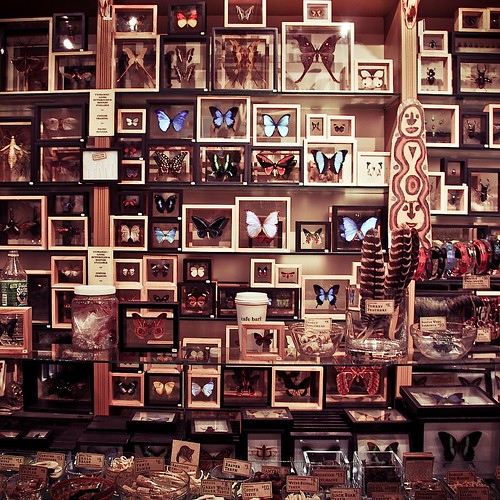
Cuba Gallery: New York / shop / nature / butterfly / background texture / interior / amazing / vintage / photography by ►CubaGallery


credit,image source


We're out taking photographs of Christmas lights. There are so many beautiful displays, and we want to capture them on film. So as we prepare to take our pictures of Christmas lights, we back away so that we can capture the entire magnificent scene within our frame.

Correct. But also incorrect, if that's all we do. And this leads to our first Christmas photography tip for illustrating Christmas light displays.

(1) The best Christmas lights photography captures not only panoramic scenes, but also close-ups of the highlights within the panorama. We want both. Let's say that on the sprawling front lawn of a suburban home, we see Santa on his sleigh in one location, and a Salvation Army bell-ringer in a second spot, and a nativity scene someplace else. In addition to our distant Christmas photograph, we can also zero in on each of those three highlights.

(2) Opt for a high shutter speed. We want to illustrate the lights, not the light that they emit. A wide angle lens is for the panorama, and a macro lens is for the close-ups.

(3) Those Christmas light displays are so brilliant in the deep, dark, Silent Night. Maybe so, but our Christmas photography will be lousy at that point. Our photos will show the lights, but not the property in the background. Or, we'll see the property but we won't clearly see the lights, so to speak. Our best bets are at dusk or at dawn, and overcast usually is better than clear sky.

(4) If we're really dedicated and sticklers for perfection, we'll shoot our Christmas photography both at dusk and at dawn. Great photography of any sort is trial and error. Furthermore, if we show up maybe a half-hour before the optimal time, then we can plan our logistics and our camera angles, so that we're ready when the time is right. Extra time = excellence in our Christmas photography.

(5) Let's see here. We have the lights. We have the various props that go with the lights, such as the nativity scenes or Santa on his sleigh. We have the property in the background. Aren't we forgetting something? Oh yes, the sky. The sky! Look at examples of Christmas lights photography that impress you (or even thrill you) the most, and odds are that the sky will play a prominent role. Seek an angle at dusk that shows an afterglow in the evening sky. To include more sky, shoot from a low angle, upward toward the Christmas lighting display and toward the sky.

(6) People. Where are the people? Just because your subject is Christmas lights photography, that doesn't mean the scene must be devoid of people. Have some children pose in the scene, or better yet, just tell them to go ahead and frolic. This can add a unique element to your Christmas lights photography.

SOURCES

http://www.intofotos.com/photography/2007/11/10/how-to-photograph-christmas-lights/

http://strobist.blogspot.com/2006/12/how-to-photograph-christmas-lights.html

http://www.slrphotographyguide.com/tips/christmas-lights.shtml

Photography Project #1: Recreate Family Photos


Cuba Gallery: Summer / sky / clouds / ocean / sea / beach / wave / color / sunset / photography by ►CubaGallery


credit


A fun photography project you can do with your family or friends is to recreate special photographs. Here's how to do it:

Gather old photographs. Take a look through your photo albums to gather the old photo(s) you'll use. Try to go back as far as you can. If you're a teen recreating a moment from your childhood just a few years before, you'll have a large enough contrast. If you're an adult you'll want to go back further to a time when you looked somewhat different than you do now. Pick out a photo that is really memorable to you and others. The photo could have been embarrassing when it was taken, but you laugh about it now. Narrow down your top choices and consider which ones you can realistically recreate.

Grab your family and friends in the original photograph. After you've selected a photograph make sure your photo subjects are on board with recreating the special moment. If someone didn't like their hair in a certain photo now is the time for them to change it a bit. If the photo is a goofy or silly moment you'll want to maintain that same humorous nature.

Dress the part. You don't have to try to recreate the hair and clothing styles of the 90's, 80's, 70's, 60's, but you can wear the same type of clothing. If you're wearing suit in the original photograph, put on another suit. You may also want to similar colors if possible. If a fashion has come back in style similar what you're wearing in the original photograph, that could make for a stylish comparison.

Find the location. Try to go to the same location as the original photograph so both background and setting will be consistent. In some cases there may be a location you can't access. You may not be able to get into your old high school cafeteria. Or maybe you've moved to a different house. Try to find a similar location. If the photo was taken in your old kitchen, take a similar one in your new kitchen.

Study the poses. If you and a couple of friends have distinct poses in the old photo do exactly the same thing. If the photo is more of a close up then focus more on having the same facial expressions.

Place the photos side-by-side. Now that you've taken your recreated photograph take a look at the old and new images. What similarities do you see? What differences? Enjoy your new photo as you've just created new memories.